Your Photography Website Isn't Weird Enough.
An interior designer's rant about boring McMansions sent me down a rabbit hole — straight into the realization that headshot photographers have the exact same problem, and AI is quietly making it worse.
Jun 04, 2026
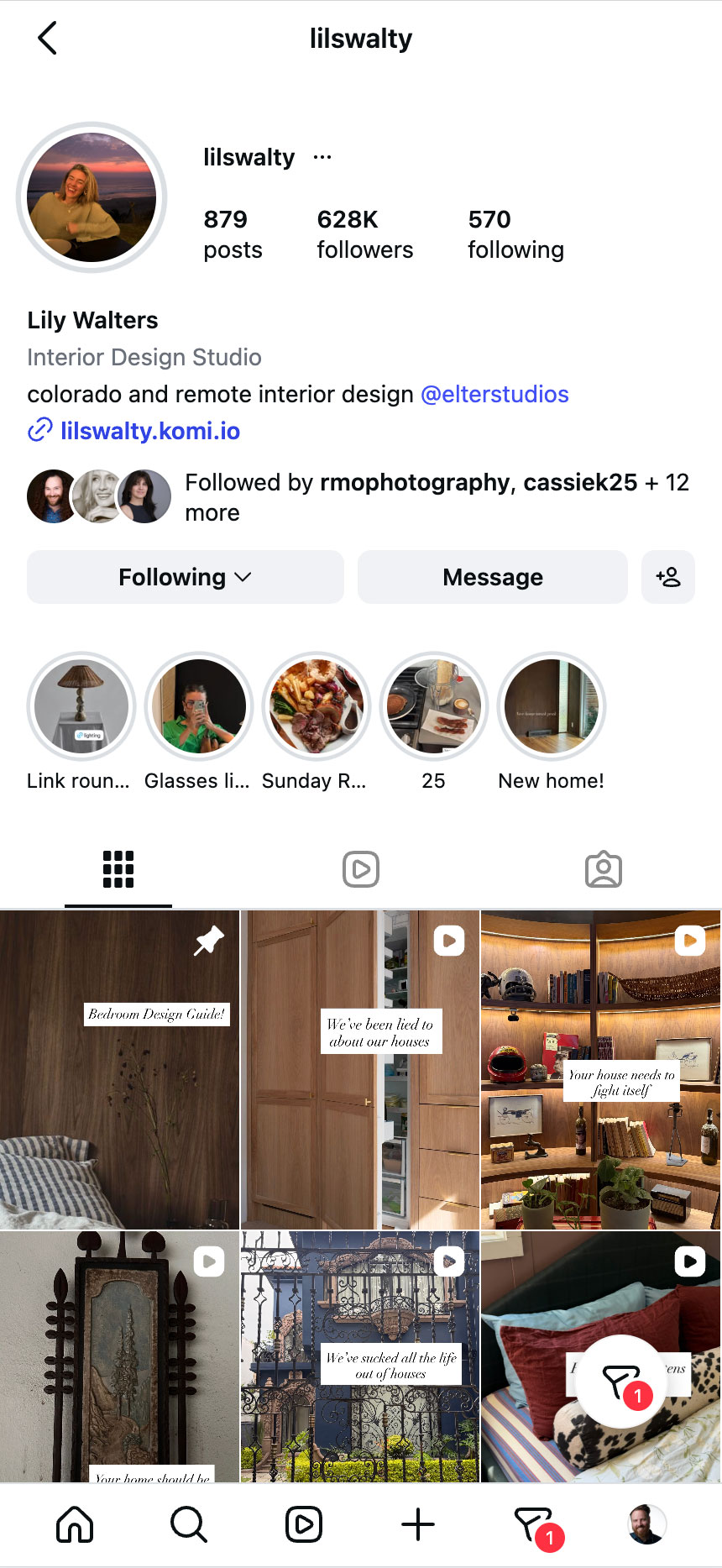
I was flipping through Instagram stories last week when one of Lily Walters' videos stopped me cold.
If you don't know Walters — and if you're a working photographer there's a decent chance you don't — she's a Denver-based interior designer with about a million followers and a running thesis about what's wrong with American homes. Her catchphrase, more or less, is your home isn't weird enough. Her favorite punching bag is the vanilla McMansion: the risk-averse, "tasteful," "timeless" home that looks exactly like every other home because everyone decorated by absorbing the same Pinterest boards, the same flipper aesthetic, the same earth-toned, beige-on-greige, character-stripped HGTV playbook. Watch one of her takedowns and you'll find yourself nodding involuntarily. Watch two and you'll start mentally redecorating. Watch three and you'll be at the paint store.
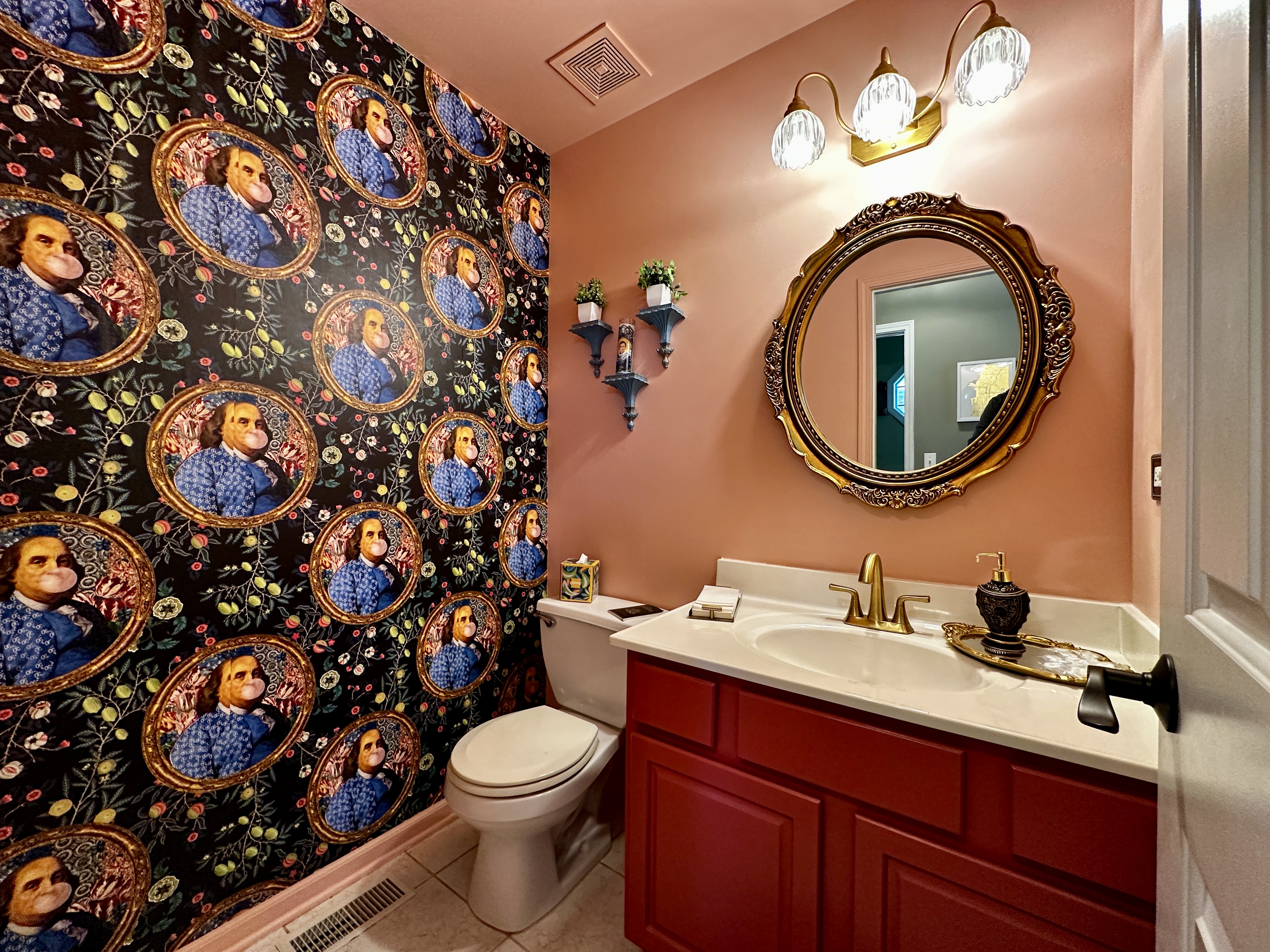
I'd already been at the paint store. A few weeks before this particular rabbit hole, I'd turned my powder room into a Benjamin Franklin shrine — bubblegum-pink wallpaper of Ben blowing a pink bubble, walls and trim and ceiling and door color-matched to the bubble, the Declaration of Independence hung at eye level from the throne, the Constitution propped up for anyone who needs a refresher.
What stopped me cold this time was that every word of Walters' McMansion thesis transferred — almost without revision — to photographer websites. The risk-averse "tasteful" thing. The "timeless" as a euphemism for "afraid to commit to anything." The Pinterest-board sameness. The dawning suspicion that something is wrong with the entire category and nobody has named it out loud yet.
So let me try.
The villain has a name
Headshot photography in 2026 has a McMansion problem. Walk through twenty competitors' websites with a notebook and you'll come back with the same About-page intro, the same hero image of a photographer-with-camera-half-obscuring-their-face, the same three serif fonts, and the same dozen phrases performing the same job they were performing in 2019. Capture your essence. Elevate your professional image. Let your personality shine. Your face is your logo. First impressions matter. Variations on a theme that turned into a genre that turned into a sound that turned into wallpaper.
It would be easy to blame laziness. It would be easy to blame Squarespace templates. Neither is the villain. The villain arrived in late 2022 and has been quietly editing all of us toward the average ever since.
97% of content marketers plan to use AI in their marketing in 2026 — up from 64.7% in 2023. That's near-universal adoption in roughly three years. Which means almost every photographer writing their own copy is doing it with an AI co-author whether they realize it or not — pasting a draft into ChatGPT and asking for a "punchier" version, asking it to "make this sound more professional," asking for ten About-page intros to choose from.
Here's the part that should make you pause. A study out of SISSA and Imperial College analyzed 14 million PubMed abstracts and found that at least 10% of 2024 academic abstracts had been processed with LLMs — up to 30% in some sub-corpora. They figured this out by watching specific words spike in frequency after ChatGPT's launch. Words like delve, showcasing, underscores, pivotal, realm, meticulous, and the now-infamous tapestry. One editor told Forbes:
"I no longer believe there's a way to innocently use the word 'tapestry' in an essay; if the word 'tapestry' appears, it was generated by ChatGPT."
If it's happening to academics — who pride themselves, professionally, on original thinking — what do you think it's doing to a headshot photographer's About page?
The mechanic is straightforward and unavoidable. AI is trained on the internet's existing content. The existing content is what we all collectively wrote about ourselves. The most-used phrases are statistically the most likely outputs. So when you ask ChatGPT to write copy for your headshot business, it hands you back — with great confidence — the exact vocabulary the other 9,500 headshot photographers in the country have been using for a decade. It isn't malfunctioning. It's working perfectly. It's optimizing for what we already say — which is precisely the thing Walters is yelling about with the homes.
The algorithm averaged us all into beige. McMansions, but for sentences.
Why this is a bigger problem than it sounds like
If you read the article I wrote on AI search visibility — the one about being invisible to ChatGPT and Claude when prospective clients are looking for photographers in your category — you already know where this is going. AI search engines decide who to recommend by looking at what you say about yourself and how it matches the question being asked. If your About page reads like every other photographer's About page in your city, you have not given the AI a reason to recommend you over any of them. You've given it permission to flip a coin.
The McMansion problem and the AI invisibility problem are the same problem wearing different outfits. One shows up as a website that bores buyers. The other shows up as a website that confuses AI. The cure for both is the same: stop sounding like everyone else, on purpose, with specificity that can't be averaged.
Which brings me to the morning I realized I was the problem.
The day I caught myself
A few months ago I was trying to land on a new tagline for my studio. I had a few directions I was kicking around, and I did what most of us do — I dropped them into Claude and asked for ten options.
The first came back with capture your essence. The second: elevate your professional image. The third: your face is your logo. The fourth: headshots that mean business. By the seventh I was reading "in today's digital landscape" — which I'd argue is the tapestry of the headshot world — and at that point I closed the laptop and went for a walk.
The frustrating part wasn't that the AI was bad at writing. The AI was extremely good at writing. The problem was that the AI was extremely good at writing the same thing every other photographer's website already says. I wasn't getting bad copy. I was getting industry-average copy. Which, in this industry, is functionally indistinguishable from bad copy.
When I got back to my desk, I did something almost embarrassingly low-tech. I opened a document and started a list. The phrases I never wanted to see in a photographer's marketing again. Capture your essence. Elevate your image. Your professional calling card. Stand out from the crowd. Make a lasting impression. Your face is your logo. Headshots that mean business. I added in today's digital landscape in bold and underlined it twice. Then I kept going.
By the end of the afternoon I had something like 80 entries. By the end of the week, well over a hundred.
The next morning I pasted the list into Claude's system prompt and gave it one instruction: Don't use any of these. If you catch yourself reaching for one, find another way.
Everything changed.
Not because the AI suddenly became creative — it didn't. It became constrained, which is a different thing and a better thing. With the easy phrases off the table, the model had to actually engage with what I'd written about myself — the specific clients, the specific work, the specific way I describe what happens in my studio — and reflect that back. The copy started sounding like me again. Weirder. More specific. Recognizable from across the room. It turned out the trick wasn't getting AI to be more creative. It was getting AI to stop reaching for the autocomplete-shaped escape hatch in the wall.
What happened when other photographers ran the play
I shared the list with the small coaching community I work with — maybe two dozen working headshot photographers, all of whom were quietly fighting the same battle. Within a couple of weeks I started seeing About pages and service descriptions come back that genuinely surprised me.
One photographer opened with a sentence about her studio smelling like coffee and her assistant's hairspray. Another led with a paragraph about why he refuses to shoot anyone wearing brand-new clothes. A third wrote three sentences about her grandmother that I'd defy any other photographer in the country to plagiarize. The work didn't improve because anyone learned to write — they already knew how to write. The work improved because the list took the average-shaped escape hatch away.
Here's a tell that the strategy holds up under pressure: when researchers publicly identified delve as a ChatGPT signature in early 2024, its frequency in academic abstracts dropped — fast. But other AI-favored words like significant kept climbing, because nobody had flagged them yet. The implication is uncomfortable and clarifying at the same time. The only way to write around AI sameness is to know exactly what AI sameness looks like in your category. You can't avoid what you can't name.
The list is the naming.
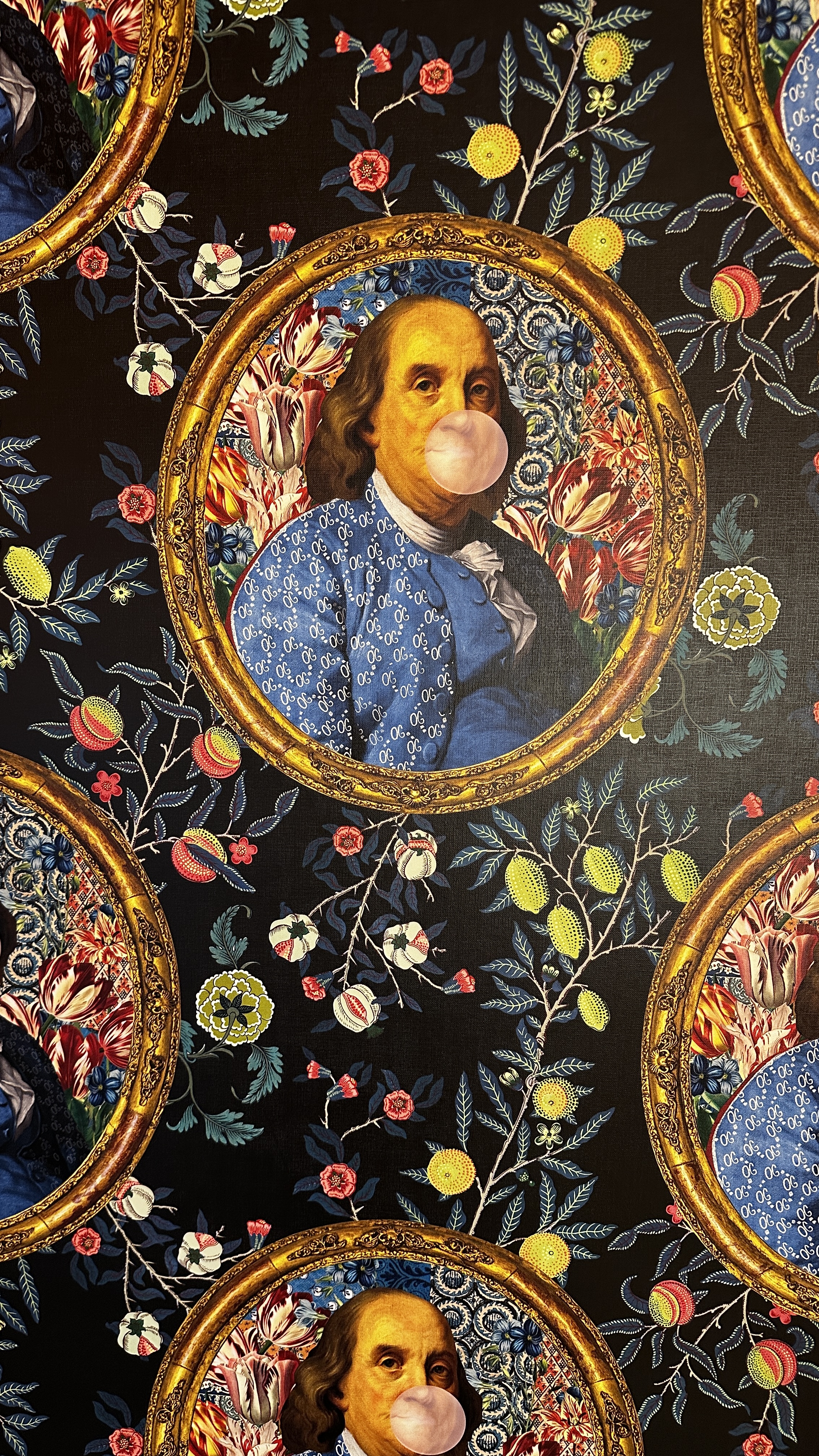

The algorithm averaged us all into beige. McMansions, but for sentences.
Michael Schacht, 312 Elements
The list, and what's coming next
I've made the full list available — all 100+ entries, organized by category, with notes on why each one is on there and what to consider reaching for instead. It's free, it lives at [opt-in link], and there's a second box on that form where you can drop your own site URL if you want to be considered for the series we're about to run.
Fair trade. I'll show you mine if you show me yours.
This article is the first in a series we're running at theScoop.photo about all the ways photographer websites in our category have quietly turned into McMansions — template homepages, the obligatory behind-the-camera selfie, the muted earth-toned palettes, the navigation labeled "Investment," the whole catalog. We'll pick on all of it. And the sites that get featured will come from the submissions, which means the series will be honest about what's actually out there — not a curated set of strawmen I went hunting for to make a point.
For now, start with the language. It's the cheapest thing to fix and the loudest tell. Your About page is the front door of the McMansion. Repaint it.
Your website isn't weird enough.
And I mean that with my whole heart.
Headshot photographer websites have all started sounding identical, and AI is the accelerant — it's trained on what we already wrote, so it hands back the industry average every time. I caught myself doing it when Claude spat out the same handful of worn-out taglines for my own studio. So I built a list of 100+ phrases to forbid and fed it to the AI as a constraint, and my copy started sounding like me again. When I shared the list with other photographers, their About pages got specific and strange in the best possible way. Fix the language first — it's the cheapest thing to change and the loudest tell that you've gone generic.
Written by
Michael Schacht
Twelve time winner of Chicago's best headshot photographer honors. Mentor at Peter Hurley's Headshot Crew Editor at "The Scoop" Owner at 312 Elements Headshot Photography Creator of Headshot Hotsauce Create of 312AiSEO